What is The Matrescence Project?
The Matrescence Project was brought to life by Sarah after her own journey of matrescence. Noting in her story that it was “astonishing that no one ever spoke that word (matrescence) when she became a mother. It wasn’t until years later that she discovered this word and describes it like a fog lifting, with so many fragments of her experience aligning.
Sarah has photographed 50 women and their families and gathered their stories of becoming a mother to tell the story of matrescence. Each written piece and each photo is unique and layered, showcasing the nuanced experience through pregnancy, birth, and mothering. Beautifully displaying the threads of isolation, fear, and silence with connection, love, and alignment that are often the juxtaposition experienced in the very messy journey of matrescence.
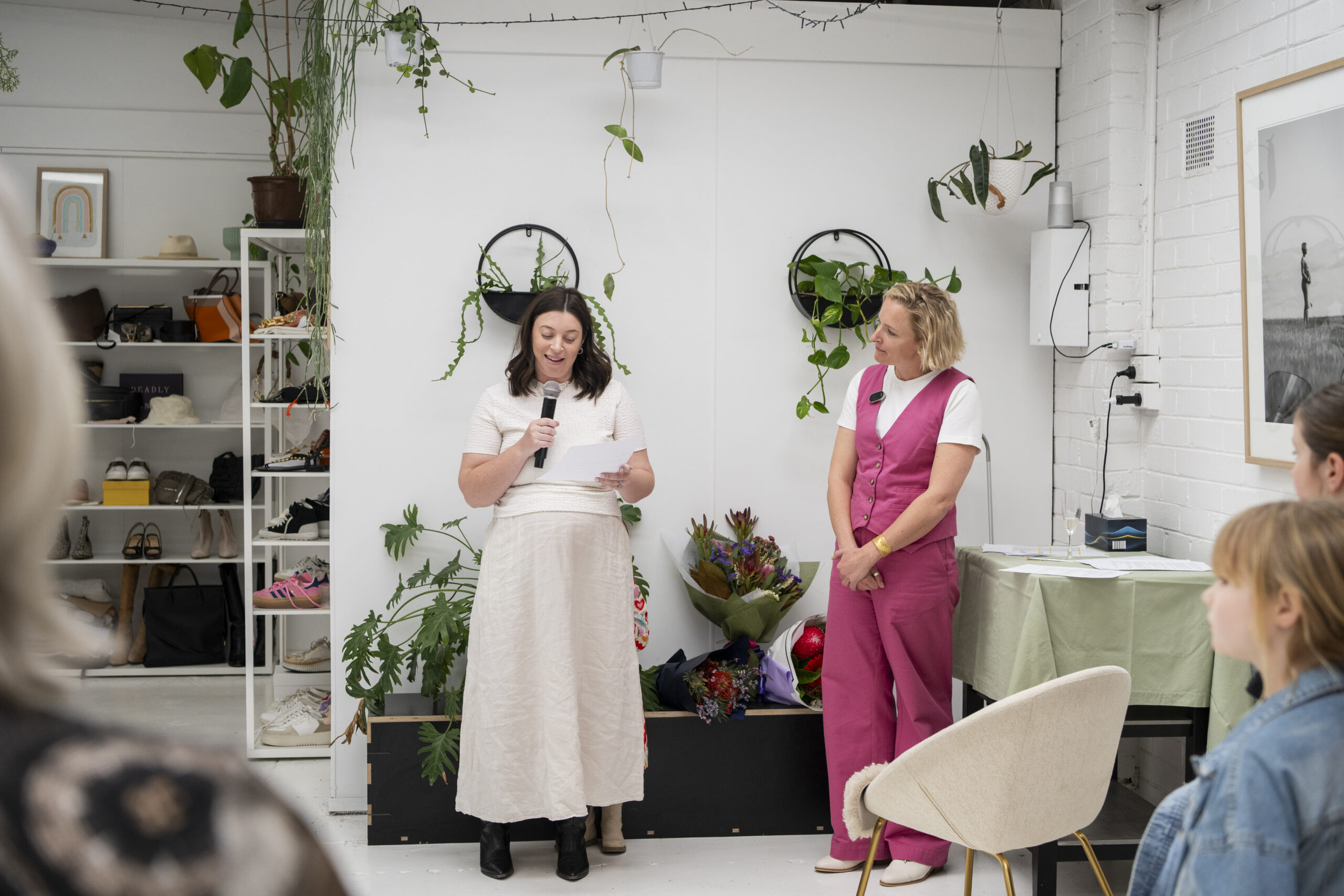
Through sharing our stories we weave matrescence into our circles of belonging, our communities, and our understanding of this profound journey. Below, I share my story that was featured in the book along with a photo of myself with my husband, daughter (and of course my daughters favorite Monkey).
Bronte’s story
My matrescence felt – and still feels- messy.
I have learned that it should.
It arrived as an unexpected invitation to completely unravel. To question everything: my values, how I showed up for others, and how I showed up for myself.
Before I became a mother, I already held many of the qualities associated with motherhood – kindness, care, self-sacrifice. These qualities helped me in my work and within my family of origin. So, I thought little of what it would mean to become a mother. I knew it was something I always wanted and yearned for, but didn’t expect it to change me so drastically.
My perspective on mothers and motherhood was completely altered when I went through the rite of passage myself. As a maiden, I saw my mum do so many hard things, hold space for others, and endure unthinkable experiences. I heard stories of my nana and the sacrifices she made to protect her children. But I always understood those things as happening to them – external events. I saw them as strong and resilient.
Now, as a mother myself, I wonder about their inner landscapes and private dialogues. they didn’t have this word: matrescence. I wonder if they felt isolated, if they thought it was their fault, or believed they deserved the struggle. I wonder if they knew it was not them, but the system that sold them a story of motherhood as the happiest time of their lives – and then left them to struggle through it alone.
From the outside, I’m not sure if others noticed the change in me. The unravelling. The re-learning. It was, and still is, happening beneath the surface. I remember, during early motherhood, thinking: I just want to do it right. I want it to be perfect. I placed enormous pressure on myself, which was only reinforced by society’s messaging around being a “good mum”.
When I couldn’t meet the impossible standard, my inner critic showed up and told me I wasn’t enough – that I should be doing more. And that’s what I saw around me too: mothers doing more, learning more, pushing through – never mentioning the violent storm raging inside.
So I too stayed silent.
At the same time my values were clashing. I was being redefined without knowing it – without even having the language to describe what was happening. I felt so lost. I had no idea who I was anymore. I questioned everything: my career, my hobbies, my style, my capabilities.
But in the day-to-day, I just kept showing up.
I truly love being a mother. My daughter gives me so much – she sparked a passion in me that had previously lain dormant. This only added to my confusion. I had no idea what I was feeling, or why.
I loved it.
And at the same time – it was so fucking hard.
I wasn’t ready for the identity shifts that motherhood would bring. I wasn’t ready for the intrusive thoughts or the unfamiliar feelings I’d have about myself. The gap between expectation and reality left space for sadness, anger, and disconnection.
I wonder what a women’s experience of becoming a mother would be like if everyone knew about matrescence the way we know about adolescence.
I wonder – but really, I think I know.
Mothers would feel seen and heard. They would experience community care and connection.
They would be met with kindness and understanding – by others, and by themselves.
They wouldn’t face hard things alone.
They would face them together.