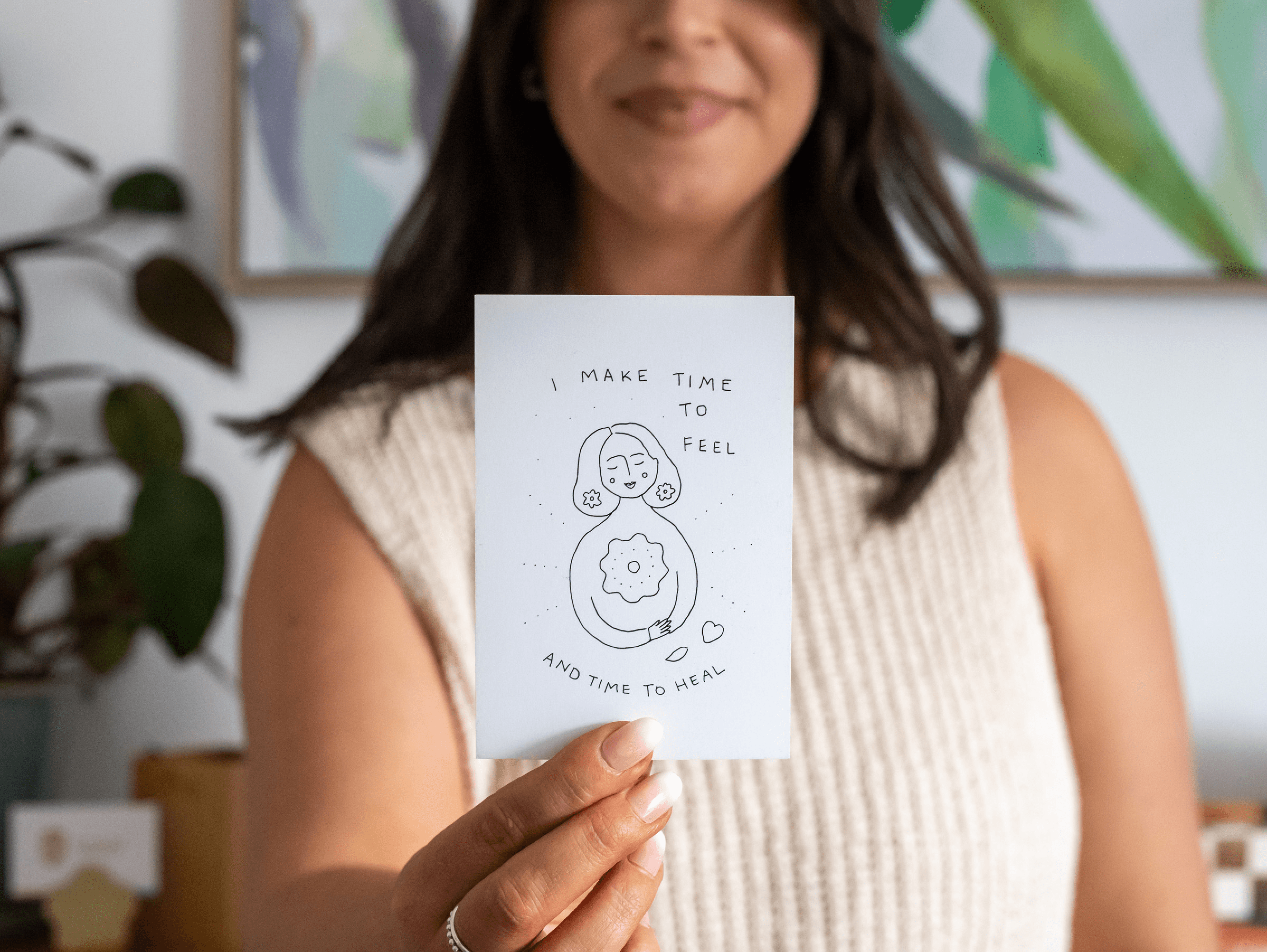
Introducing our Schema Group:

Cultivating Inner Balance

Cultivating Inner Balance

Is Schema Group Therapy right for you?

Is Schema Group Therapy right for you?

Do you feel guilty or selfish for having your own needs?

Do you find it difficult to identify and articulate what your needs are?

Do you find it hard to set boundaries?

Do you feel other people’s emotional pain and feel a responsibility to help?

Do you prioritise other people’s needs over your own?

Did you grow up believing that love is conditional?

Do you find yourself focused on the reactions, opinions or approval of others?

Do you experience a lot of guilt in your relationships?

Do you struggle to get your needs or rights respected?

Do you struggle to be assertive?

Do you go along with what someone close to you says even if you disagree, for fear of rejection or other negative consequences?

Do you let other people make choices for you?

If you relate to some of these questions,
this group may be for you.

If you relate to some of these questions,
this group may be for you.

“Other-directedness” is one of the domains in the Schema Therapy model that includes three schemas (otherwise known as beliefs); Self-Sacrifice, Subjugation and Approval Seeking.

Jeffery Young, the Founder of Schema Therapy, explains that these three schemas are “characterized by an excessive focus on the desires, feelings, and responses of others, at the expense of one’s own needs — in order to gain love and approval, maintain one’s sense of connection, or avoid retaliation”.

People who can relate to the above questions, often grew up in families where their needs were not met or where they were punished for expressing their own needs and wants. As a result, they learned to suppress their own needs and desires in order to please others. This can lead to a number of problems, including:


  • Low self-esteem: People with other-directedness often have low self-esteem because they have never learned to value their own needs and wants.

  • Difficulties in relationships: People with other-directedness often have difficulty in relationships because they are constantly trying to please others and may not be able to assert themselves or set boundaries.

  • Low mood and anxiety: People with other-directedness are more likely to experience low mood and anxiety because they are not living in accordance with their own values and needs.


This group is designed to help you identify and challenge unhelpful core beliefs that are keeping you stuck in painful patterns, develop coping skills, and build healthier and happier relationships.

Program Objective

Program Objective

Equip you with cognitive techniques to identify and understand schemas.

  • Explore how schemas are formed and their influence on thoughts, emotions, and behaviours.

  • Foster a compassionate relationship with your inner child to address unmet emotional needs.

  • Learn about coping modes and enhance self-awareness around coping.

  • Introduce experiential exercises like chair work to help participants reframe and address maladaptive coping mechanisms.

  • Empower you to identify inner strengths and values to enhance resilience.

  • Develop strategies for nurturing the Healthy Adult mode to take charge of life’s challenges effectively.

  • Develop skills for setting boundaries.

  • Encourage exploration of the vulnerable child’s needs through reflective exercises, such as writing letters to the younger self.

  • Support participants in building self-compassion and promoting emotional healing.

  • Introduce a schema diary to track schema activation and growth.

  • Provide an audio-flashcard tool to reinforce positive self-statements and behavioural changes.


Who is this Schema Group Therapy for?

  • This group has been designed to support people who are 18 years and older. This group is not suitable for young people and adolescents under 18 years old.    

  • For those who relate to subjugation, self-sacrificing and approval seeking tendencies.  

  • For those who want to learn and discover if Schema Therapy is the right approach for them.  

Mold inspector working

Ready to Connect ?

Submit an enquiry, book a call, or phone us directly – Hannah, our friendly Admin and Client Support officer, will be the first to greet you.

Are you enquiring about a specific therapist?

Click Here

Ready to Connect ?

Submit an enquiry, book a call, or phone us directly – Hannah, our friendly Admin and Client Support officer, will be the first to greet you.

Are you enquiring about a specific therapist?

Click Here

Ready to Connect ?

Submit an enquiry, book a call, or phone us directly – Hannah, our friendly Admin and Client Support officer, will be the first to greet you.

Are you enquiring about a specific therapist?

Click Here

Centre Self Collective values the lived experience and contributions of people from all cultures, genders, sexualities, bodies, spiritualities, ages, abilities and backgrounds. We are committed to cultivating inclusive environments and are dedicated to building a sustainable and an environmentally aware practice. 

Acknowledgement and Commitment to First Nations Justice. Centre Self Collective acknowledges the Wurundjeri Woi Wurrung people of the Kulin Nation as the Traditional Custodians of the land on which we live, work, and offer care. We recognise their deep and enduring connection to land, waters, skies, and community - and we pay our respects to Elders past and present. We honour the wisdom, strength, and resilience of Aboriginal and Torres Strait Islander peoples across all communities. As social workers and mental health practitioners, we hold a deep awareness of the systemic harm our profession has contributed to, including the forced removal of children, policies of assimilation, and the ongoing disruption of families, cultures, and Country. These injustices continue to reverberate through intergenerational trauma and ongoing structural inequities. We recognise that sovereignty was never ceded. Centre Self Collective stands in solidarity with Aboriginal and Torres Strait Islander peoples. We wholeheartedly support the Uluru Statement from the Heart, the journey toward Treaty in Victoria, and the principle of Aboriginal self-determination. 

©

2026

Centre Self Collective, All rights reserved.

Centre Self Collective values the lived experience and contributions of people from all cultures, genders, sexualities, bodies, spiritualities, ages, abilities and backgrounds. We are committed to cultivating inclusive environments and are dedicated to building a sustainable and an environmentally aware practice. 

Acknowledgement and Commitment to First Nations Justice. Centre Self Collective acknowledges the Wurundjeri Woi Wurrung people of the Kulin Nation as the Traditional Custodians of the land on which we live, work, and offer care. We recognise their deep and enduring connection to land, waters, skies, and community - and we pay our respects to Elders past and present. We honour the wisdom, strength, and resilience of Aboriginal and Torres Strait Islander peoples across all communities. As social workers and mental health practitioners, we hold a deep awareness of the systemic harm our profession has contributed to, including the forced removal of children, policies of assimilation, and the ongoing disruption of families, cultures, and Country. These injustices continue to reverberate through intergenerational trauma and ongoing structural inequities. We recognise that sovereignty was never ceded. Centre Self Collective stands in solidarity with Aboriginal and Torres Strait Islander peoples. We wholeheartedly support the Uluru Statement from the Heart, the journey toward Treaty in Victoria, and the principle of Aboriginal self-determination. 

©

2026

Centre Self Collective, All rights reserved.

Centre Self Collective values the lived experience and contributions of people from all cultures, genders, sexualities, bodies, spiritualities, ages, abilities and backgrounds. We are committed to cultivating inclusive environments and are dedicated to building a sustainable and an environmentally aware practice. 

Acknowledgement and Commitment to First Nations Justice. Centre Self Collective acknowledges the Wurundjeri Woi Wurrung people of the Kulin Nation as the Traditional Custodians of the land on which we live, work, and offer care. We recognise their deep and enduring connection to land, waters, skies, and community - and we pay our respects to Elders past and present. We honour the wisdom, strength, and resilience of Aboriginal and Torres Strait Islander peoples across all communities. As social workers and mental health practitioners, we hold a deep awareness of the systemic harm our profession has contributed to, including the forced removal of children, policies of assimilation, and the ongoing disruption of families, cultures, and Country. These injustices continue to reverberate through intergenerational trauma and ongoing structural inequities. We recognise that sovereignty was never ceded. Centre Self Collective stands in solidarity with Aboriginal and Torres Strait Islander peoples. We wholeheartedly support the Uluru Statement from the Heart, the journey toward Treaty in Victoria, and the principle of Aboriginal self-determination. 

©

2026

Centre Self Collective, All rights reserved.